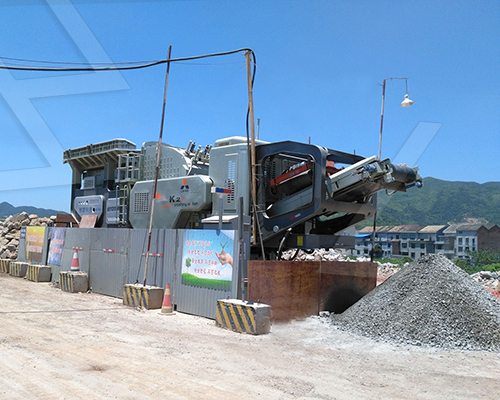
Founded in 1987, Liming Heavy Industry specializes in the production of stationary crushers in medium and large models, mobile crushing plants, and ball mills. With over 30 years of technical experience, the company adopts advanced production technologies from the United States, Germany, Australia, and other countries. The company's professionalism and product quality are comparable to well-known international brands in the industry.
Nigeria’s infrastructure boom—from Lagos to Abuja—has driven a massive demand for processed river stones. At Henan Liming Heavy Industry Co., Ltd., we provide specialized mobile crushing stations designed to handle the high abrasiveness of river pebbles while offering the flexibility to move between sites.
1. Equipment Introduction: The Pebble Crusher Setup
River pebbles are typically rich in silica, making them very hard. A standard mobile plant for this material requires “Heavy-Duty” components.
The Ideal Configuration for Nigeria:
Primary Stage: Mobile Jaw Crusher (to handle large feed sizes).
Secondary Stage: Mobile Cone Crusher (essential for hard river pebbles to ensure low wear costs).
Final Stage: Mobile Sand Maker (VSI) if you are producing manufactured sand.
Mobile Crusher
2. Working Principle: The “Crush and Shape” Process
To get the best ROI, the mobile crusher follows a high-efficiency path:
Extraction: Raw pebbles are collected from the riverbed and fed into the mobile hopper.
Primary Break: The Jaw Crusher reduces the boulders to a manageable size.
Secondary Refining: The Cone Crusher uses laminated crushing to break the hard pebbles. This is more cost-effective than using an impact crusher for this specific material.
Screening: The integrated vibrating screen separates the stones into 1/2″, 3/4″, and 1″ sizes, commonly used in Nigerian construction.
3. Applicable Materials in the Nigerian Market
While optimized for River Pebbles, these mobile units are versatile across Nigeria for:
Granite: Abundant in states like Kogi and Cross River.
Basalt: For heavy-duty road bases.
Limestone: For cement and flux applications.
4. Technical Parameters and Price Factors
The price of a mobile crusher in Nigeria is not a single figure; it depends on your required capacity (TPH) and the “Chassis” type.
Capacity (TPH)
Recommended Model
Estimated Configuration
Price Influence Factors
50–100 TPH
K3 Series
Jaw + Screen
Basic investment, high mobility
150–250 TPH
NK Series
Jaw + Cone + Screen
High efficiency, medium scale
300+ TPH
LD Series
Track-mounted Multi-unit
High-end, mining scale
Why prices vary in Nigeria:
Shipping & Clearing: Logistics to Apapa or Onne ports.
Power Source: Diesel-electric dual-power units (highly recommended for Nigeria’s power grid).
Wear Parts: The quality of the manganese steel liners.
5. Application Case: Pebble Crushing in Port Harcourt
Project: A local contractor needed 200 tons per hour of crushed stone for a drainage project.
The Liming Solution: We supplied a Mobile Cone Crushing Plant.
Result: The customer saved significantly on haulage costs because the crusher moved along the riverbank as the material was collected.
ROI: The plant paid for itself within 10 months due to the high market price of crushed river stone in the Niger Delta.
6. Why Choose Liming Heavy Industry (Henan Liming)?
As a trusted partner in the Nigerian mining sector, Henan Liming Heavy Industry Co., Ltd. offers:
Localized Spare Parts: We have warehouses in Africa to ensure you aren’t waiting weeks for a toggle plate or a mantle.
Tropical Design: Our engines and hydraulic systems are built to handle Nigeria’s heat and humidity.
On-site Commissioning: Our engineers visit your site in Nigeria to train your local team.
Flexible Financing Advice: We help you understand the total cost of ownership, including duties and local transport.
Conclusion: Get a Tailored Price Quote
The price of a River Pebble Mobile Crusher in Nigeria starts with choosing the right configuration. Don’t overspend on a machine that is too big, and don’t lose money on a machine that wears out too fast.
Would you like a detailed price list and a 3D site layout for your Nigerian quarry? Contact Liming Heavy Industry today for an expert consultation!